Product Design
Making Training Personal
A redesigned Strava experience that prioritizes clarity and relevance over feature density.
Context
The Original Challenge
Strava's standardized interface doesn't reflect how different users engage with fitness. Users have varying motivations, some are coach-guided athletes, others are competitive, solo achievement trackers, or socially motivated.
The Academic Exploration
Through my bachelor project, I conducted co-design research with interviews and workshops. Participants shaped their own fitness tracking experience, and the insights became three personalized design concepts for different user archetypes.
The Personal Touch
Personalization research revealed powerful insights, but real products must serve many users without fragmenting the experience. I synthesized the findings into one unified interface built on clear hierarchy and navigation.
Key Design Decisions
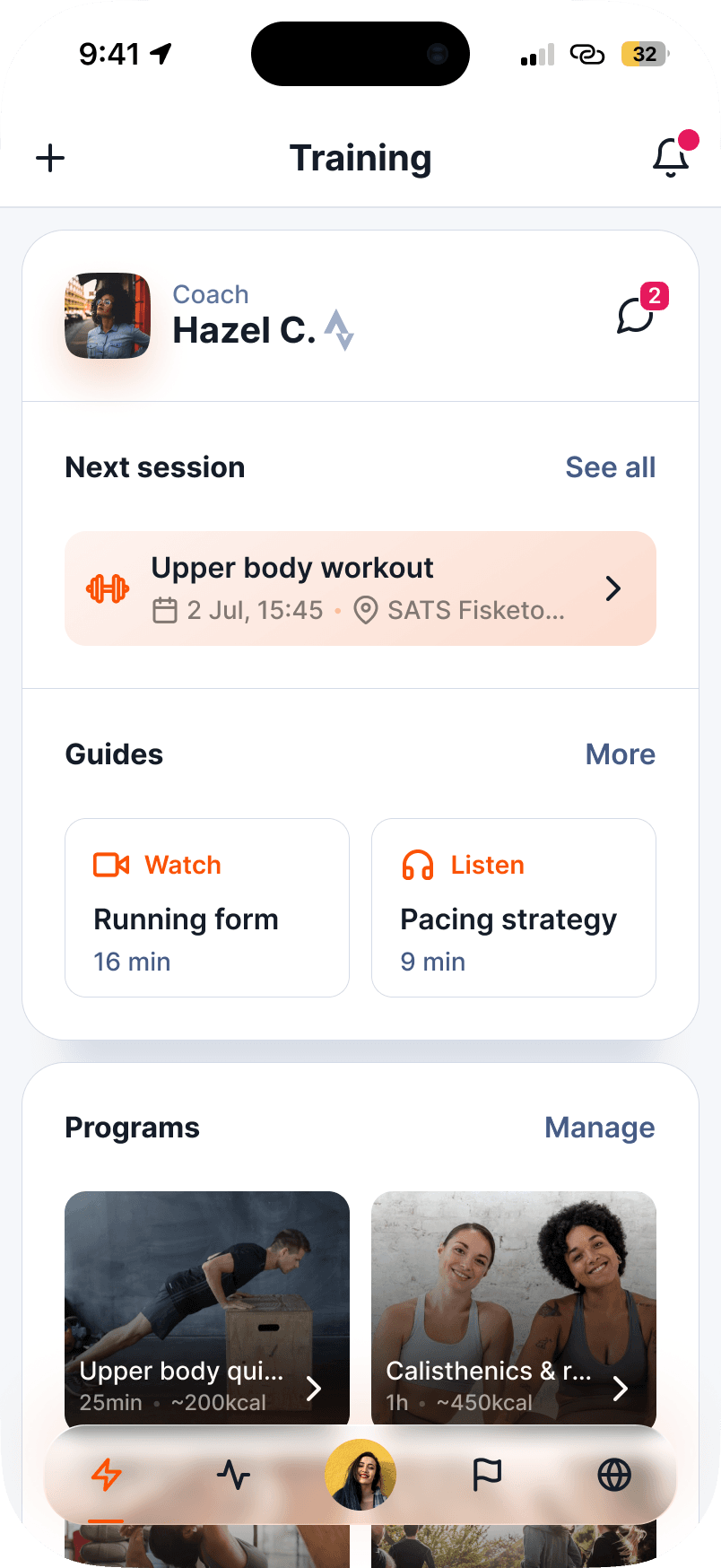
Training tab: Emphasizes coach relationship and upcoming sessions (from research showing coach-guided users value structure)
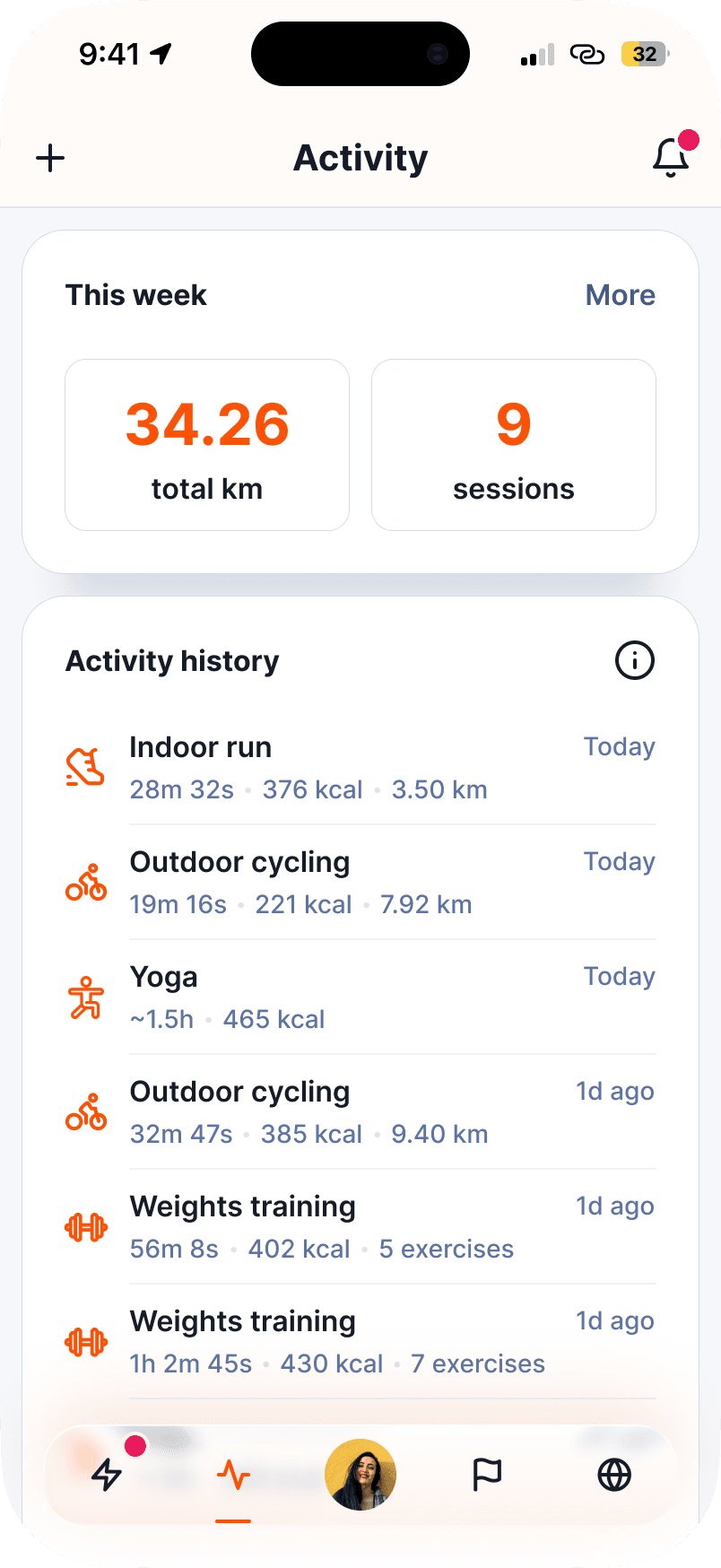
Activity tab: Highlights weekly totals and activity breakdown (users care about progress over time, not daily granularity)
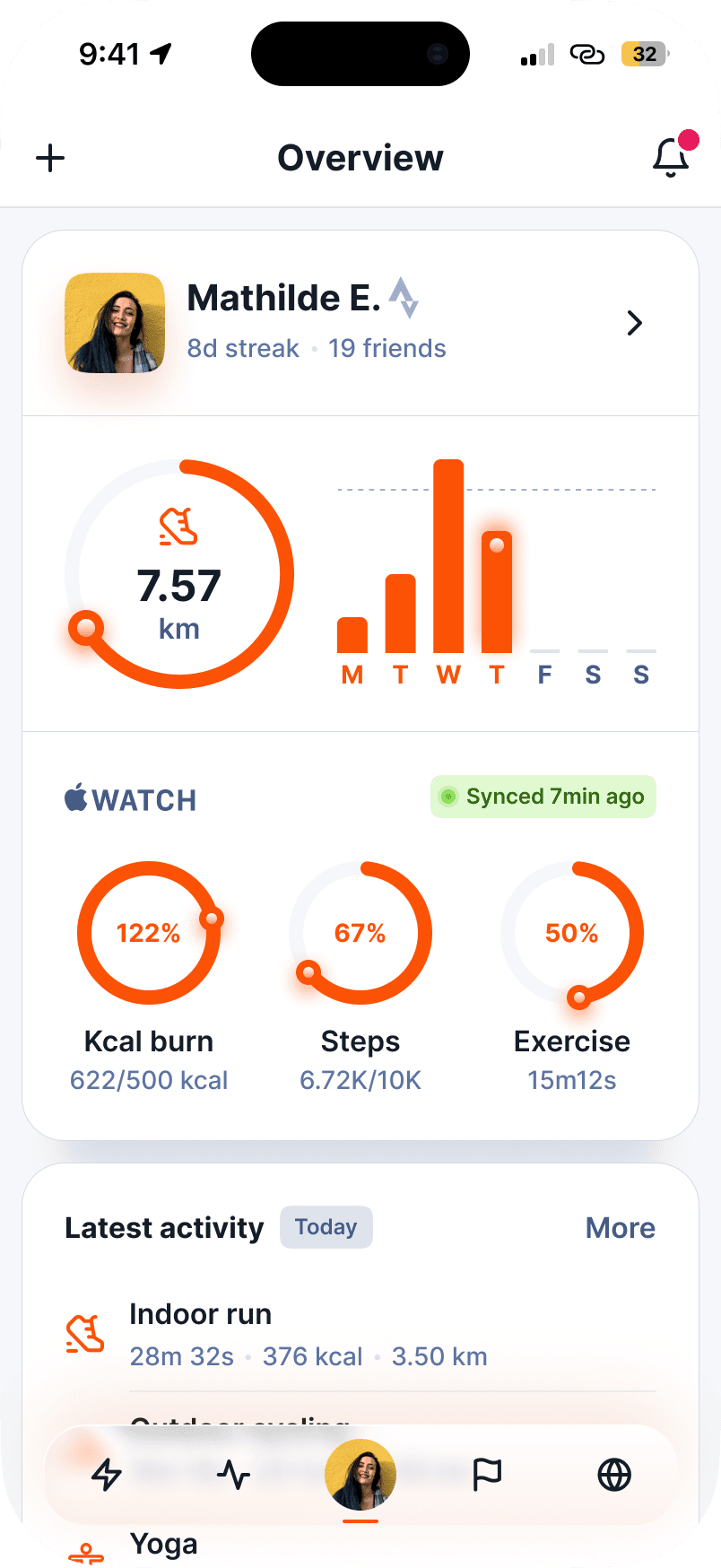
Overview tab: Focuses on personal achievement and progress tracking (social comparison and self-motivation are separate motivations)
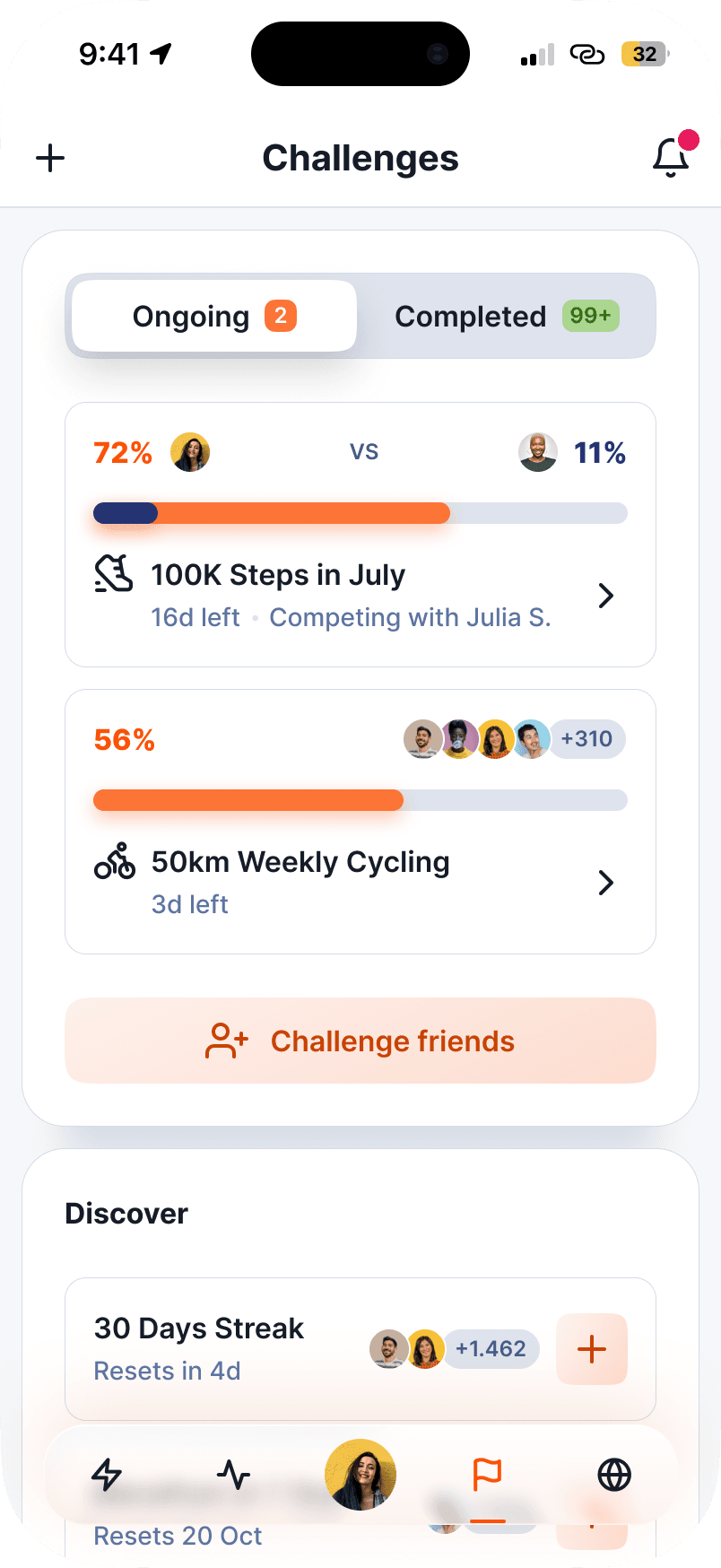
Challenges tab: Emphasizes competitive and collaborative features (challenge-based motivation differs from solo training)
Research & Design Process
The Original Challenge
Fitness tracking apps like Strava rely on standardized interfaces that fail to accommodate the diversity of individual users. While users engage for motivation and self-improvement, their needs and relationships to data vary significantly, creating a gap between user and technology that reduces motivation and relevance.
Process: Co-design Approach
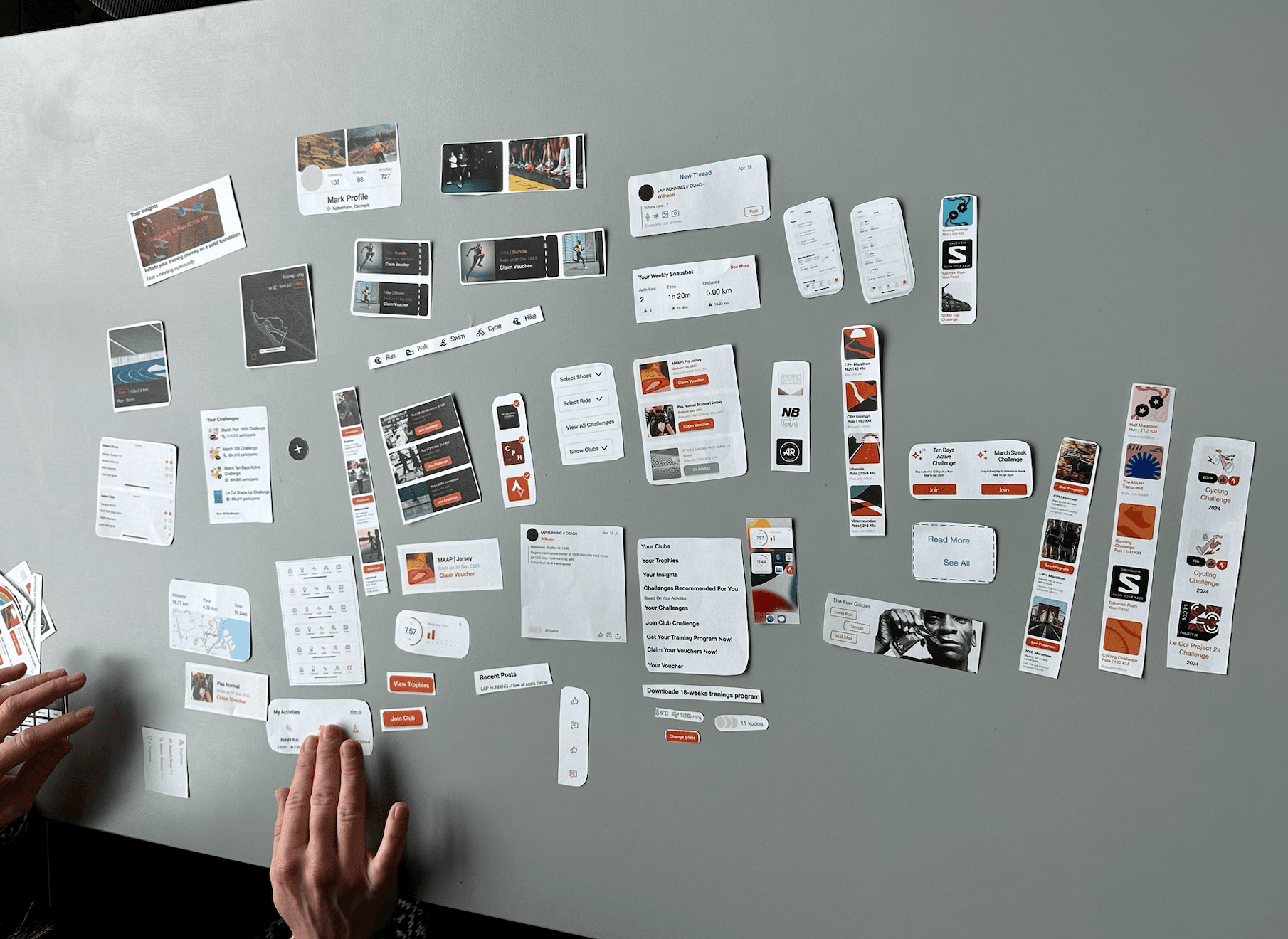
Using co-design methods, interviews, and workshops, participants designed their own fitness tracking experience using print-outs, paper, and pencils. These insights were translated into three personalized concepts reflecting different values, motivations, and preferences.
The main challenge was designing for individuality rather than generalization. Instead of creating one “optimal” solution, the project explored multiple parallel designs to reflect the diversity of user needs.
Solution: Personalized Concepts
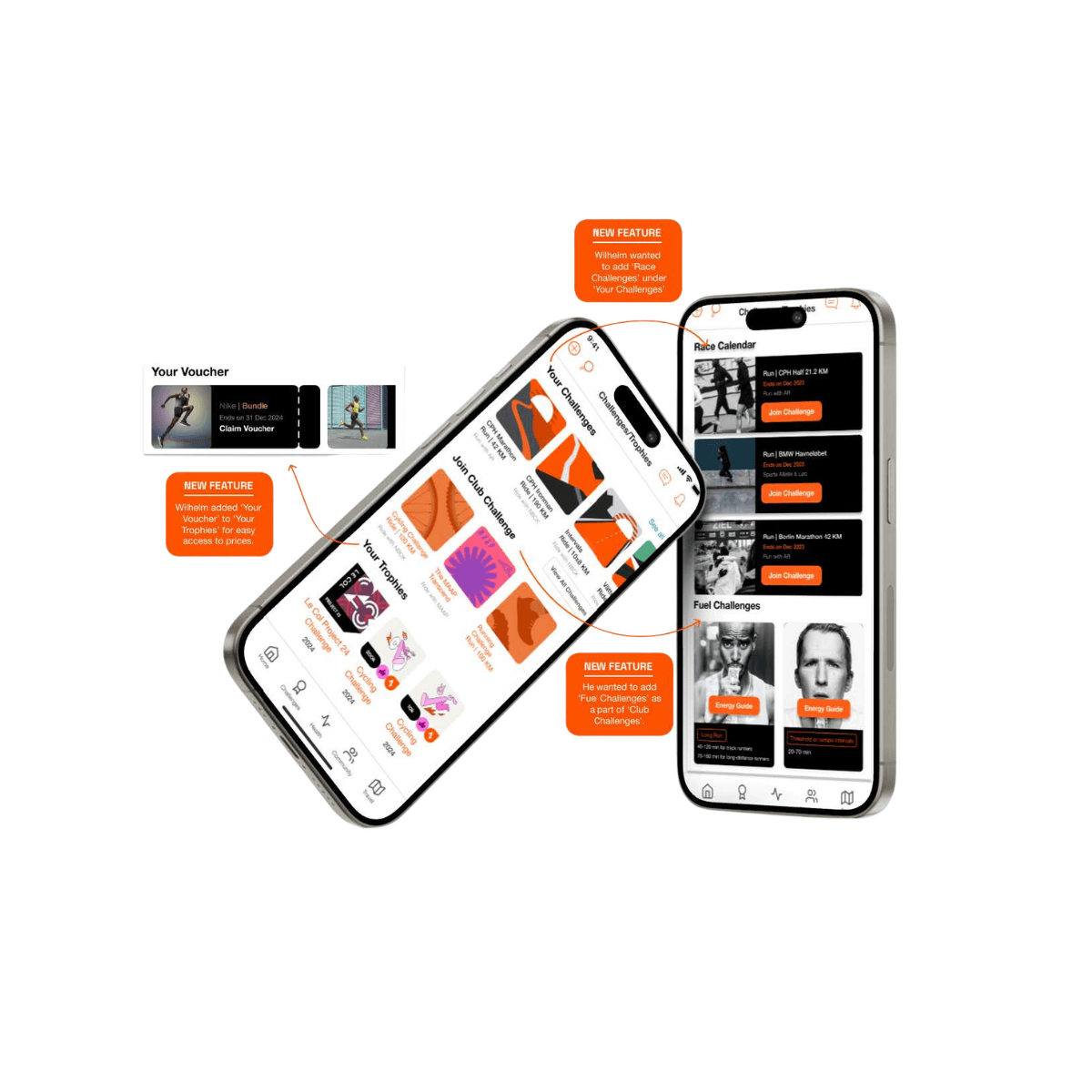
The solution consists of three personalized UI concepts designed to reflect different user needs, motivations, and behaviors. Rather than a single standardized interface, each concept improves clarity and relevance by aligning the interface with the user's personal goals and preferences.
Intended Impact
User Impact: Tailoring the experience to different user needs increases engagement, retention, and consistency in app usage.
Product Impact: With the new design, I explored how the personalized concepts can be integrated into one cohesive experience. Further validation would test how well that direction holds up in real use.
The Redesign in Motion
Where You Stand, at a Glance
Sync your wearables and see your complete fitness picture. Weekly performance metrics, streaks, and personalized insights help you understand what's working and where to push harder.
Rise to the Challenge
Compete with friends in friendly fitness battles. Track group progress, celebrate wins together, and stay accountable as part of a community that values movement and mutual support.
Expert Guidance at Your Side
Connect with personalized coaching programs designed for your fitness journey. Video guides, live sessions, and progress tracking keep you motivated every step of the way.
Every Move Matters
Detailed activity logs capture every run, ride, and workout. Track duration, calories burned, and distance with beautiful charts that show your progress at a glance.